
When to See a Fertility Specialist in HK: A Guide for Couples


Did you know that approximately one in six couples in Hong Kong face challenges when trying to conceive? It's a common struggle, yet knowing exactly when to see a fertility specialist in HK often feels like a guessing game played against a ticking clock. Whether you're worried about age-related decline or just starting to look at your options, the pressure to make the right move at the right time is intense.
We understand that the local medical landscape can be intimidating, especially when you're trying to weigh the lower costs of public hospitals against their long waitlists and strict eligibility rules. You deserve a clear path forward that cuts through the technical jargon and addresses your specific concerns. In this guide, we'll outline the clinical guidelines for seeking help, explain the differences between private and public routes, and highlight the red flags that mean it's time to book an appointment. You'll finish this article with a concrete timeline and the confidence to take your next step.
Key Takeaways
- Learn the clinical "one-year rule" and why age 35 marks a critical shift in your timeline for seeking expert advice.
- Identify specific medical red flags, such as irregular cycles or a history of endometriosis, that warrant an immediate consultation regardless of how long you've been trying.
- Navigate the local healthcare landscape by comparing the public Hospital Authority pathway with private clinics to decide when to see a fertility specialist in HK.
- Prepare for your first visit with proactive steps like cycle tracking and lifestyle adjustments that provide your doctor with essential data.
- Understand what to expect during your initial diagnostic tests, including pelvic ultrasounds and blood work, to reduce anxiety before your appointment.
The Standard Timeline: When to Book a Fertility Consultation
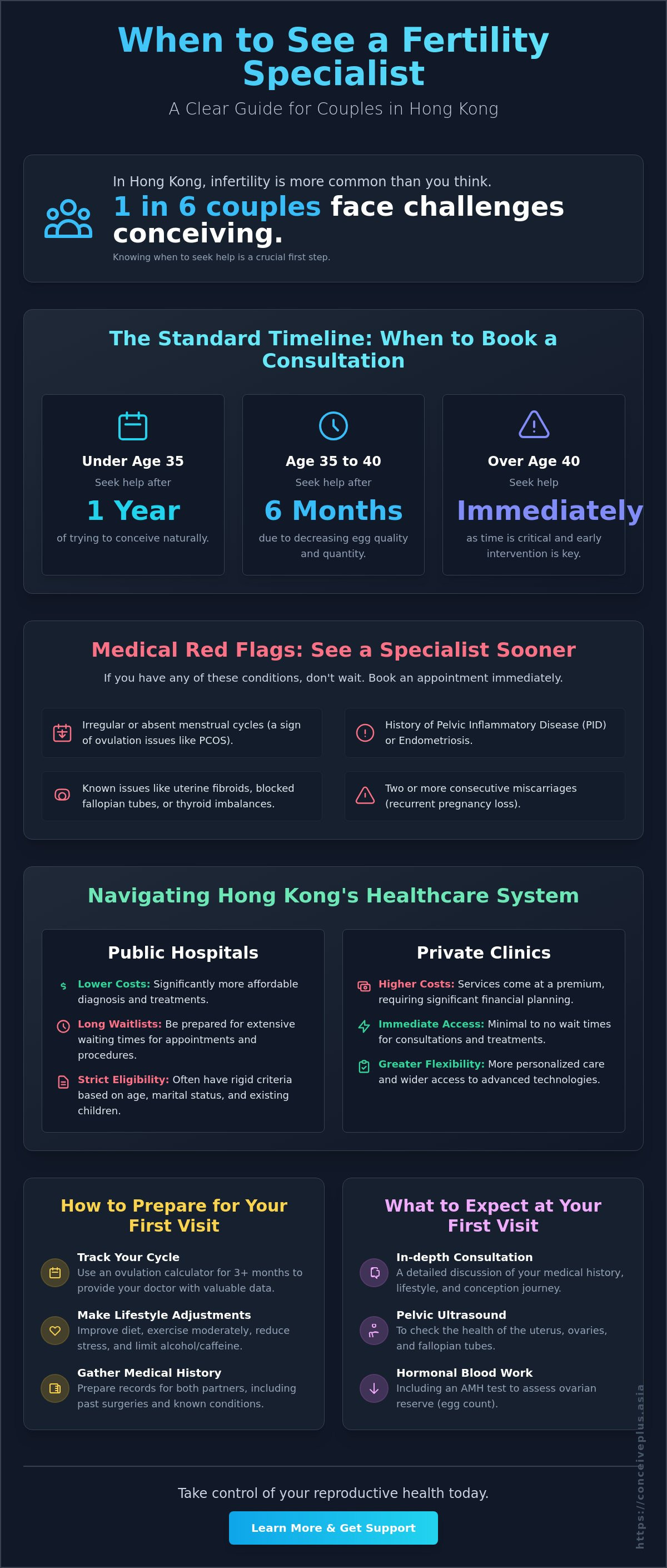
Most couples start their journey toward parenthood with optimism, but after several months of negative tests, the question of when to see a fertility specialist in HK becomes urgent. For those under age 35 with regular menstrual cycles, which you can track using an ovulation calculator, the standard clinical advice is to try naturally for one full year. This timeframe allows for the natural statistical variance of conception, as even healthy couples only have about a 20 to 25 percent chance of conceiving during any single month.
However, the biological clock necessitates a more proactive approach as we age. If the woman is between 35 and 40, professionals recommend seeking a consultation after just six months of trying. For those over 40, waiting is generally discouraged. Due to the rapid decline in egg reserves, an immediate evaluation is the safest route to ensure all options remain on the table. A foundational step in understanding infertility is recognizing that early intervention often leads to much better outcomes.
To better understand this concept, watch this helpful video:
Understanding Age and the Fertility Cliff
Fertility isn't a slow, steady slope; it's more like a cliff that becomes steeper in your late 30s. Biological age directly impacts both the quantity and the chromosomal quality of a woman's eggs. Doctors often use the Anti-Müllerian Hormone (AMH) test as a primary screening tool to assess ovarian reserve. While a low AMH doesn't mean you can't get pregnant, it signals that your window of opportunity might be closing faster than expected. Waiting until age 37 or 38 to seek help can be a risky strategy, as the success rates for treatments like IVF begin to drop significantly after this point.
The 1-in-6 Statistic in Hong Kong
In Hong Kong, infertility is more common than many realize. Local data from the Hong Kong Sanatorium & Hospital suggests that approximately one in six couples in the city experiences difficulties conceiving. This rate is slightly higher than some global averages, likely influenced by the city's unique environment. Factors like high-stress careers, late marriage trends, and the high cost of living often lead couples to delay childbearing. Understanding when to see a fertility specialist in HK is the first step toward taking control of your reproductive health. Seeking help isn't a sign of failure; it's a practical step in a city where reproductive assistance is a standard part of family planning for thousands of residents every year.
Medical Red Flags: Why You Might Need an Earlier Visit
While age-based guidelines provide a helpful framework, they don't account for pre-existing medical conditions that can hinder conception from day one. In many cases, waiting for the six or twelve-month mark is unnecessary and potentially counterproductive. If you recognize certain red flags in your medical history, the question of when to see a fertility specialist in HK shifts from "eventually" to "as soon as possible." Early intervention is particularly vital if you have a history of pelvic inflammatory disease (PID) or endometriosis, as these conditions can cause structural issues like blocked fallopian tubes that no amount of timed intercourse will resolve.
Another critical red flag is a history of recurrent pregnancy loss. If you've experienced two or more consecutive miscarriages, it signals a need for a deeper investigation into potential genetic, hormonal, or uterine factors. Seeking professional advice early in these scenarios can save you and your partner months of emotional distress. Don't feel obligated to wait for a standard timeline if your body is already sending signals that it needs support.
Ovulation and Hormonal Indicators
Irregular or completely absent menstrual cycles are often the first sign of ovulation dysfunction. Conditions like Polycystic Ovary Syndrome (PCOS) can disrupt the regular release of an egg, making natural conception difficult to time. You can use an ovulation calculator to track your cycles over three months. If you find your fertile window is unpredictable or non-existent, it's a clear indicator that you should consult a specialist. Thyroid imbalances also play a significant role in reproductive health; both overactive and underactive thyroids can interfere with implantation and early pregnancy maintenance.
The Male Factor: It is Not Just About the Woman
It's a common misconception that fertility challenges are primarily a female concern. In reality, about 40 to 50 percent of all cases involve male-side factors. This is a significant gap in many public discussions, yet it's a critical reason for both partners to attend the first consultation. Men with a history of testicular surgery, trauma, or significant lifestyle risks such as heavy smoking or high-stress environments should be evaluated sooner rather than later.
Signs of low testosterone or poor sperm quality aren't always obvious to the naked eye. A simple semen analysis is often the first and easiest diagnostic step in any fertility workup. It provides immediate clarity on sperm count, motility, and morphology. If you're looking for ways to support your journey before your appointment, you can explore targeted nutritional support to help optimize your reproductive health. Understanding that fertility is a shared journey ensures that both partners receive the care they need from the start.
Navigating the Hong Kong Healthcare System: Private vs. Public
Deciding when to see a fertility specialist in HK also involves deciding where to seek that help. In Hong Kong, this choice is usually a balance between your budget and your biological timeline. While the public system offers high-quality care at a subsidized rate, the wait times can be a significant hurdle for couples already worried about age-related decline. If you're wondering when to see a fertility specialist in HK, you should consider that your starting point heavily influences how quickly you'll receive treatment.
The public route requires patience and meeting specific eligibility criteria, while the private sector provides immediate access to specialists in hubs like Central or Tsim Sha Tsui. Many couples find that while they wait for a public appointment, they begin initial diagnostic testing or lifestyle adjustments to optimize their chances. You can find more advice on preparing your body for conception on our fertility blog. Understanding these two pathways helps you manage expectations and choose the route that fits your family's needs.
The Public System (Hospital Authority)
To access subsidized fertility services, you'll need a referral from a Maternal and Child Health Centre (MCHC) or a General Practitioner. The Hospital Authority (HA) manages these specialized clinics, but the queue for assisted reproductive technologies like IVF is often long, sometimes stretching into months or years. Eligibility is strictly limited to legally married heterosexual couples where the wife is a Hong Kong permanent resident under the age of 40. Additionally, the public system typically prioritizes couples who don't already have biological children. If you meet these criteria, it's a cost-effective resource, but the time investment is substantial.
Choosing a Private Fertility Specialist
For those who don't meet the public criteria or feel they can't afford to wait, private clinics are the primary alternative. One of the biggest advantages is continuity of care; you'll likely see the same consultant at every visit, which helps build trust. When selecting a clinic, look beyond the location. Investigate the quality of their embryology lab and their success rates for your specific age group. While the costs are higher than the public route, the speed of access is unparalleled. Most private specialists can see you within a week, allowing you to start diagnostic blood work and ultrasounds immediately. This efficiency is often why couples choose the private route when they feel they've already spent too much time trying naturally.
Proactive Steps: What to Do Before Your Appointment
Deciding when to see a fertility specialist in HK is a major milestone. To make the most of that first hour, you need to arrive with more than just questions. Specialists rely on data to form a diagnostic plan. If you spend your first session trying to remember the date of your last period or a surgery from five years ago, you lose valuable time. Gathering your medical records, including any previous hormone blood work or surgical reports, ensures your doctor starts with a complete picture. This preparation helps you avoid redundant testing and moves you toward a solution faster.
Data Collection and Cycle Tracking
One of the most helpful things you can provide is a record of your menstrual cycles over the last three to six months. This data helps the specialist identify potential ovulation issues or luteal phase defects immediately. Instead of relying on memory, use an ovulation calculator to document your peak fertility windows and the length of your cycles. Be sure to note any physical symptoms like severe cramping or unusually heavy bleeding. These details are often clinical markers for conditions like endometriosis or fibroids, which we discussed as red flags in previous sections. Accurate tracking turns vague concerns into actionable medical data.
Nutritional and Lifestyle Optimization
It takes roughly 90 days for lifestyle changes to impact the quality of developing eggs and sperm. If you've already identified when to see a fertility specialist in HK, start optimizing your health today. This includes cessation of smoking and reducing alcohol intake, both of which are known to negatively affect DNA fragmentation in sperm and egg viability. Managing your BMI is also critical, as being significantly under or overweight can disrupt the delicate hormonal balance required for regular ovulation. Both partners should be involved in these changes, as sperm health is just as susceptible to lifestyle factors as egg quality.
The high-stress nature of the Hong Kong lifestyle can be a silent barrier to conception. Chronic stress affects the hypothalamic-pituitary-ovarian axis, potentially delaying ovulation. Incorporating high-quality prenatal supplements rich in folic acid, iodine, and antioxidants is a standard recommendation for both partners. To simplify this process, you might consider fertility support bundles that provide the specific nutrients needed to prime your body for pregnancy. By taking these proactive steps, you aren't just waiting for an appointment; you're actively improving your success rates. To get started on your preparation, you can explore our range of reproductive health products designed for couples in Hong Kong.
What to Expect During Your First Specialist Visit
Once you've determined when to see a fertility specialist in HK, the initial consultation might feel like a daunting step. It's helpful to remember that this first visit is primarily about information gathering. Both partners should attend, as the specialist will conduct a comprehensive review of your collective medical and reproductive histories. You'll discuss everything from cycle regularity and past surgical procedures to lifestyle habits and how long you've been actively trying. This dialogue forms the foundation of your personalized diagnostic plan.
While the conversation is vital, the first visit also initiates the "diagnostic cycle." This is a series of tests designed to pinpoint specific barriers to conception. For the woman, this usually involves a pelvic ultrasound and detailed blood work. For the man, it involves a semen analysis. These tests aren't just about finding problems; they're about establishing a baseline so your specialist can recommend the most efficient path forward. Understanding the mechanics of these tests can help lower the anxiety often associated with the first appointment.
Common Diagnostic Procedures
A transvaginal ultrasound is typically performed to assess the antral follicle count (AFC), which provides a visual estimate of your ovarian reserve. Alongside this, blood tests will measure levels of Follicle-Stimulating Hormone (FSH), Luteinizing Hormone (LH), and Anti-Müllerian Hormone (AMH). To ensure your fallopian tubes are clear, your doctor might schedule a HyCoSy or HSG test. These procedures check for patency, ensuring there are no physical blockages preventing the egg and sperm from meeting. These steps are essential for a full clinical picture.
Don't overlook the importance of the semen analysis. This test evaluates sperm count, motility (how they move), and morphology (their shape). Since male factors contribute to nearly half of all fertility challenges, this step is non-negotiable. It's often one of the simplest tests to perform but provides some of the most critical data for your treatment roadmap. Specialists in Hong Kong typically request this early in the process to avoid unnecessary or one-sided treatments.
Building a Treatment Roadmap
After the diagnostic results are in, your specialist will outline a treatment ladder. The goal is always to use the least invasive effective treatment first. This might start with medicated timed intercourse or Intrauterine Insemination (IUI). If these aren't suitable, you'll discuss more advanced options like In Vitro Fertilization (IVF) or Intracytoplasmic Sperm Injection (ICSI). Reviewing patient experiences can help you understand the emotional and physical journey that other couples in the city have navigated.
Your specialist's role is to guide you through these choices, ensuring you feel supported and informed at every turn. They'll explain the success rates, costs, and timelines associated with each option. Knowing when to see a fertility specialist in HK is the catalyst for this roadmap, turning uncertainty into a structured, medical plan for your future family. With the right data and a clear strategy, you can move forward with confidence.
Taking Your Next Steps with Confidence
Taking control of your reproductive health is an empowering decision. Whether you're following the standard one-year timeline or responding to medical red flags like irregular cycles, knowing when to see a fertility specialist in HK is about prioritizing your future family. By understanding the differences between the public Hospital Authority pathway and private specialist clinics, you can choose the route that best aligns with your personal timeline and goals.
Preparation is just as important as the consultation itself. With over 10 years of fertility expertise, Conceive Plus offers clinically formulated support trusted by couples worldwide. Before your appointment, you can browse our Fertility Support Bundles to prepare for your journey and ensure your body has the nutritional foundation it needs. Remember that you aren't alone in this process. Many couples in Hong Kong face similar challenges, and seeking help is a practical, positive step toward parenthood. You have the information and the tools to move forward with hope.
Frequently Asked Questions
Do I need a referral to see a fertility specialist in Hong Kong?
You need a referral from a Maternal and Child Health Centre (MCHC) or a General Practitioner to access the public healthcare system. Private specialists in Hong Kong don't require a referral, which allows you to book an appointment directly with a clinic. This direct access is a major reason why couples choose the private route when deciding when to see a fertility specialist in HK for immediate answers.
How much does a private fertility consultation cost in HK?
Private consultation fees in Hong Kong vary depending on the specialist's seniority and the clinic's location. Typically, the initial fee covers the discussion of your medical history, while diagnostic tests like ultrasounds or blood work are billed as additional items. It's best to ask for a breakdown of potential costs when booking your first appointment to manage your budget effectively from the start.
Is there an age limit for fertility treatment in the public system?
Yes, the public system has strict age limits for subsidized care. Subsidized IVF and IUI services through the Hospital Authority are only available to women under the age of 40. Additionally, the couple must be legally married, and the wife must be a Hong Kong permanent resident. Private clinics don't have these specific age restrictions, though biological factors still influence the recommended treatment path.
Should my partner come to the first fertility appointment?
Your partner should absolutely attend the first appointment. Fertility challenges involve male-side factors in about 40 to 50 percent of cases, making it a joint journey. Having both partners present allows the specialist to review both medical histories and order essential tests like a semen analysis immediately. This collaborative approach ensures you're both informed about the diagnostic plan and treatment options from day one.
What is the success rate of IVF in Hong Kong clinics?
Success rates vary by age and health, but 2023 statistics from the Council on Human Reproductive Technology provide a clear snapshot of the local landscape. Out of 8,494 non-donor IVF and frozen-thawed embryo transfer cycles reported that year, there were 1,797 pregnancies and 1,484 live-birth events. While these numbers are encouraging, your individual success rate will depend on factors like egg quality and your specific diagnosis.
Can I see a specialist if I just want to freeze my eggs?
You can certainly see a specialist for egg freezing. This is an increasingly popular option for women in Hong Kong who want to preserve their fertility for the future. As of December 1, 2025, statutory storage limits for gametes have been removed for personal use, giving you more autonomy over how long you store your eggs. This regulatory change allows individuals to decide on storage duration based on their own circumstances.
What is the average wait time for an IVF appointment in HK public hospitals?
The average wait time for subsidized fertility treatments in public hospitals can range from several months to a few years. Because demand is high and public resources are limited, the queue for the first consultation and subsequent treatment moves slowly. This long timeline is a primary factor in determining when to see a fertility specialist in HK, as many couples opt for private care to avoid losing time.
Are fertility supplements necessary before seeing a specialist?
While not strictly mandatory for your first visit, taking high-quality supplements can be a helpful proactive step. It takes about 90 days for nutrients to impact egg and sperm quality, so starting a regimen before your appointment can help prime your body. Your specialist will likely review your current supplement intake and may suggest specific antioxidants or vitamins based on your medical history and initial blood work results.


