
How to Support Your Wife Through Fertility Struggles: A Practical Guide for 2026


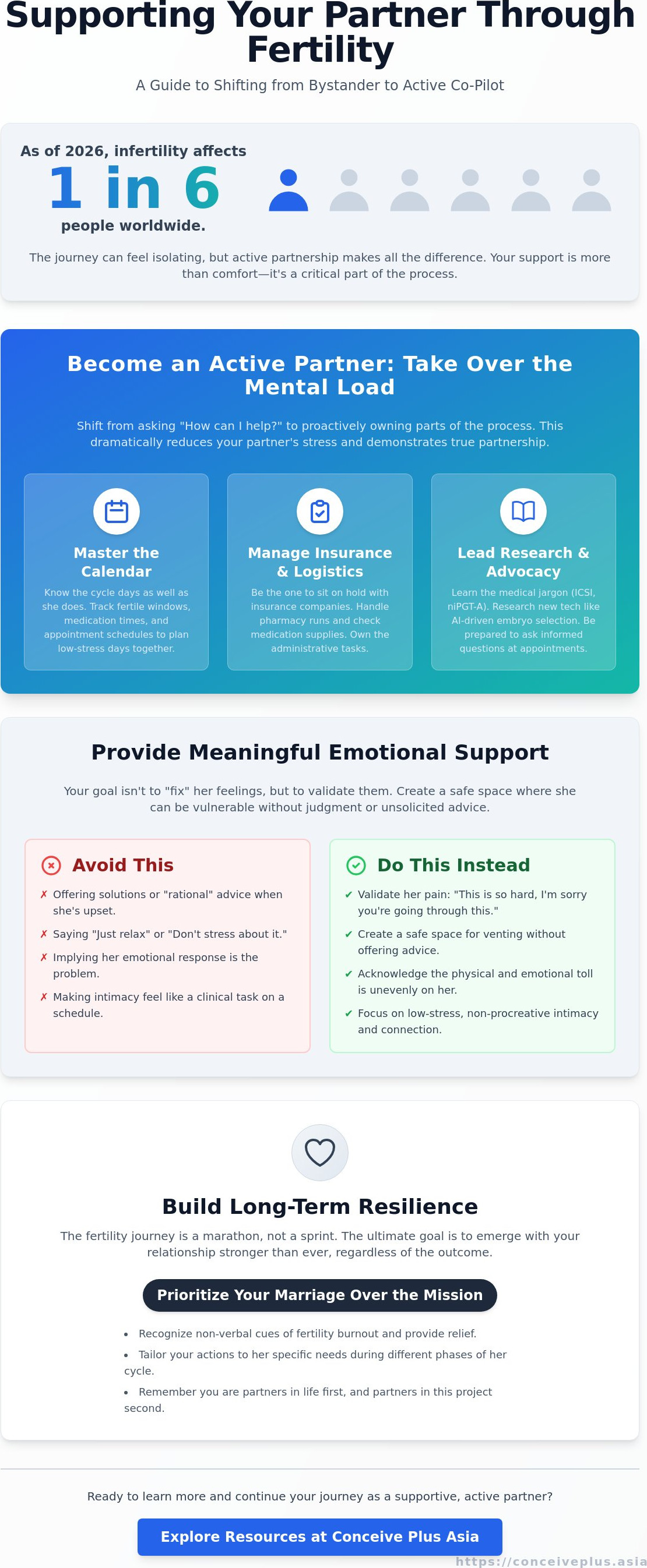
Did you know that as of 2026, 1 in 6 people worldwide experience infertility? If you're currently in the thick of it, you're likely feeling a heavy sense of helplessness while you watch your partner endure hormone cycles and constant medical appointments. Supporting your wife through fertility struggles isn't about finding a biological "cure" on your own. It's about becoming an active co-pilot in a process that often feels like it's happening only to her.
It's normal to feel confused by medical jargon or terrified of saying the wrong thing after a difficult update. You want to be her rock, but you don't want to accidentally add to her mental load. This guide offers actionable strategies to provide the emotional, physical, and logistical support she needs right now. You'll learn how to manage complex insurance mandates, understand the latest AI-driven clinic technologies, and ensure your marriage emerges more resilient than ever.
Key Takeaways
- Learn how to shift from a bystander to an active partner by "owning" specific parts of the fertility process and reducing your partner's mental load.
- Discover how supporting your wife through fertility struggles involves creating a dedicated safe space for venting where she can express her feelings without receiving unsolicited advice.
- Master the art of phase-specific support by tailoring your actions to her hormonal cycle and focusing on low-stress intimacy during fertile windows.
- Identify non-verbal cues of fertility burnout to provide physical and emotional relief before exhaustion sets in.
- Build long-term resilience by prioritizing the health of your marriage over the clinical "mission" of achieving pregnancy.
Understanding the Emotional and Physical Toll of Infertility
Infertility isn't just a medical hurdle. It's a shared life crisis that tests even the strongest foundations. While you both want a child, the reality is that the physical and emotional weight often lands unevenly. A comprehensive overview of infertility shows that causes can stem from either partner, yet the medical protocols almost always center on the woman's body. This creates a unique pressure. She might feel like her body is "failing" the family, leading to a profound sense of identity loss as she navigates a role she never expected to play.
Supporting your wife through fertility struggles requires acknowledging this imbalance. She's the one tracking basal body temperature, monitoring hormones, and enduring endless blood draws. Every month brings a grueling cycle of hope during the fertile window, followed by a period of grief when a negative test appears. It's a repetitive trauma that makes her feel isolated in her own skin. To better understand how this dynamic impacts a marriage, watch this helpful video:
The "Patient vs. Partner" Dynamic
When intimacy is scheduled by an ovulation calculator, the relationship can start to feel like a clinical project rather than a romance. She stops being your wife and starts being "the patient." This shift is exhausting. If you already have a child, the stress of secondary infertility involves the unique pain of struggling to conceive again after a previous successful pregnancy. She's the one undergoing invasive ultrasounds and daily injections while you're the one watching from the sidelines. Recognizing this physical disparity is the first step toward true empathy.
Why "Fixing It" Isn't the Goal
Most men are wired to be problem-solvers. When your wife is crying over a failed cycle, your instinct is to find a solution or offer "rational" advice. However, supporting your wife through fertility struggles effectively means learning the difference between empathy and advice. Telling her to "just relax" is dismissive and damaging. It implies her emotional response is the problem. Instead of fixing the situation, focus on validating her pain. She doesn't need a coach; she needs a partner who can sit in the dark with her without trying to turn on the lights before she's ready.
Becoming an Active Partner: Taking Over the Mental Load
Most advice on fertility focuses on being a "supportive" listener. While empathy is vital, there's a significant difference between helping your wife and owning the process alongside her. When you ask, "How can I help?" you're still casting her as the project manager. Supporting your wife through fertility struggles effectively means stepping into a co-manager role where you proactively handle the logistics, data, and research that typically fall on the woman's shoulders.
One of the most effective ways to reduce her stress is to assume responsibility for the "mental load." This involves tracking the endless stream of data points that define a fertility journey. Instead of waiting for her to tell you it's time for a pharmacy run, check the pill count yourself. Handle the insurance calls. As of 2026, 25 states and Washington D.C. have specific insurance mandates for fertility, but the fine print is notoriously dense. Be the person who sits on hold with the provider to verify coverage limits so she doesn't have to.
Mastering the Fertility Calendar
The monthly cycle is a ticking clock that dictates your entire schedule. You can take the pressure off by learning to use an ovulation calculator to understand her fertile windows without her having to "announce" them. When you know the cycle days as well as she does, you can plan low-stress evenings or weekend getaways that don't conflict with crucial testing dates. Managing the calendar also means keeping track of medication times. Setting alarms on your phone to remind her of injections or oral meds shows that you're an active participant, not just a bystander.
Research and Advocacy
Don't let her be the only one who knows what "niPGT-A" or "ICSI" means. Take the lead on staying informed by reading expert fertility blogs that cover the latest 2026 medical advancements, such as AI-driven embryo selection. When you go to clinic appointments, be the one with the notebook. Ask the tough questions about success rates and side effects. By organizing medical records and test results in a shared digital folder, you ensure that the information is accessible to both of you at any time. If you're looking for ways to feel more prepared together, you might consider exploring science-backed fertility support tools to streamline your daily routine.
By stepping into these roles, you transform the experience from something happening "to her" into a mission you're tackling as a team. This proactive stance is often more comforting than any words of encouragement could ever be.
Communication is the lifeline of any marriage, but infertility adds a layer of static that's often hard to pierce. When you're supporting your wife through fertility struggles, you'll find that words can either build a bridge or act as a barrier. The goal isn't just to talk; it's to create a "safe space" where she can vent her frustrations, fears, and anger without you jumping in to fix them. Practice active listening by mirroring her statements. If she says, "I'm exhausted by these appointments," don't suggest a nap. Instead, say, "It sounds like you're feeling completely drained by the clinic schedule." This validates her reality without dismissing her feelings.
Recognizing non-verbal cues is equally vital. Fertility burnout often manifests as withdrawal or irritability. If you notice she's quieter than usual or avoiding eye contact after a phone call with the clinic, don't press for details immediately. Offer a small gesture of support, like a cup of tea or a shoulder rub, to show you're present without demanding more emotional energy from her. Developing a shared language for "bad days" allows you both to acknowledge the stress without needing a long, exhausting explanation every time.
The "Negative Test" Protocol
The moment a period starts or a pregnancy test comes back negative is a moment of acute grief. It isn't just a "missed chance"; it's the loss of a specific hope. Avoid saying, "We can just try again next month." While logically true, it feels dismissive of the pain she's feeling right now. Instead, establish a pre-arranged protocol for these days. This might include:
- Ordering her favorite comfort food without asking.
- Canceling non-essential evening plans to provide quiet space.
- Simply saying, "I'm so sorry, I'm here with you," and letting her lead the conversation.
Having a plan in place removes the pressure of her having to explain what she needs when she's at her lowest emotional point.
Managing External Social Pressure
Social situations can be minefields. When you're supporting your wife through fertility struggles, your most important role is often that of a "social shield." Before attending family gatherings or baby showers, agree on a coded signal. A simple phrase like "I think I left the lights on" or a specific hand gesture can mean "I'm overwhelmed and we need to leave now." No questions asked.
You should also take the lead on handling intrusive questions. If a relative asks when you're having kids, don't leave her to navigate the awkwardness alone. Have a scripted response ready, such as: "We're focusing on ourselves right now, but thanks for asking." By being the one to field these questions, you protect her privacy and allow her to remain a guest rather than a target for unsolicited advice. Agree beforehand on exactly how much information you'll share with friends and family so you're always a united front.
Phase-Specific Support: Navigating the Monthly Cycle
Supporting your wife through fertility struggles requires a dynamic approach because her emotional and physical needs shift with her hormonal cycle. During the follicular phase, energy levels might be higher, but the pressure of the upcoming fertile window can create performance anxiety for both of you. Focus on "low-stress intimacy" by prioritizing connection over clinical success. Don't let the calendar dictate every touch. Instead, incorporate small gestures of affection that have nothing to do with conception to maintain your bond as a couple.
Once ovulation passes, the luteal phase brings a unique set of psychological triggers. Progesterone levels rise and then fall, often leading to mood swings, fatigue, and heightened sensitivity. This is the time to provide extra physical care. If her period arrives, the menstrual phase becomes a period of both physical pain and emotional grief. Be ready with heating pads, her favorite snacks, and a listening ear. Acknowledge that this phase is often the hardest because it marks the end of one cycle of hope and the beginning of another.
Surviving the "Two Week Wait" (TWW)
The time between ovulation and a potential positive test is arguably the most anxious period of the month. Every twinge or cramp is analyzed as a potential sign of success or failure. You can support her by planning distractions that are completely unrelated to babies or fertility. Go to the movies, start a new hobby, or take a day trip. Crucially, avoid "symptom spotting" together. If she asks if a specific symptom means she's pregnant, validate her anxiety but gently steer the focus toward something else to avoid the hyper-vigilance that fuels burnout.
Support During Medical Procedures
Whether it's a diagnostic HSG, a routine ultrasound, or an invasive egg retrieval, medical procedures are physically and mentally taxing. Your presence in the waiting room is non-negotiable. It signals that she isn't going through this alone. After the procedure, take charge of the recovery environment. Ensure she has a comfortable space to rest, stays hydrated, and has what she needs to manage post-procedural discomfort. If you want to take a more proactive role in your journey, you can explore science-backed fertility aids designed to support your reproductive health goals together.
By tailoring your support to these specific phases, you show her that you're paying attention to the nuances of her experience. It transforms the process from a clinical routine into a shared journey where her comfort is always a priority.
Building Long-Term Resilience and Next Steps
Fertility journeys are marathons that can easily turn a marriage into a clinical project. To prevent this, you must prioritize the health of your relationship over the "mission" of having a baby. Supporting your wife through fertility struggles requires you to be a strong anchor, but that's only possible if you're also looking after your own mental well-being. It's common for partners to suppress their own grief to stay "strong," but this often leads to burnout. Check in with yourself regularly and be honest about when you feel overwhelmed. A resilient partnership is built on two people who are both getting the support they need.
One practical way to reduce daily friction is to streamline your routine. Incorporating holistic support tools like fertility bundles can help you both feel prepared and organized. When you have the right supplies on hand, it removes the stress of last-minute pharmacy runs and allows you to focus on each other instead of the logistics. Remember that infertility is a shared diagnosis. Even if the physical burden isn't equal, the path forward is one you walk together as a team.
Keeping the Spark Alive
Intimacy often becomes a casualty of the calendar. To protect your bond, schedule "Non-Baby" dates where the topic of fertility, clinic updates, and cycle days are strictly off-limits. Use this time to rediscover the hobbies and interests that existed before your life became centered around conception. Whether it's a weekend hike or a local concert, these moments remind you why you chose each other in the first place. Focus on physical intimacy that isn't tied to a fertile window. Simple acts of touch, like holding hands or cuddling during a movie, help maintain a connection that feels safe rather than scheduled.
When to Seek Outside Help
Sometimes, the weight of the journey exceeds what a couple can handle alone. It's vital to recognize the signs of clinical depression or anxiety in either partner. If you notice persistent hopelessness, withdrawal from friends, or an inability to find joy in anything, it's time to normalize seeking professional counseling or joining a support group. You don't have to carry the burden in isolation. Reading success stories and reviews from others who have walked this path can also provide a much-needed sense of community and hope. Finally, have open, honest conversations about your "finish line." Discussing when to pivot strategies or explore different paths ensures that you're always moving forward as a united front, no matter what the future holds.
Strengthening Your Partnership for the Road Ahead
Infertility is a grueling test of resilience, but it doesn't have to define your marriage. By shifting the mental load and mastering phase-specific empathy, you move from being a bystander to an active co-pilot. Supporting your wife through fertility struggles effectively means prioritizing your bond over the clinical schedule. Whether it's managing the medication calendar or creating safe spaces for grief, these proactive actions transform a lonely struggle into a shared mission. When you take ownership of the logistics, you allow her the space to breathe and heal.
You don't have to navigate this path without the right tools. Thousands of couples worldwide trust our clinically developed formulas to help them feel prepared and supported throughout every cycle. If you're looking for real-life inspiration, read through our community reviews to see how others have navigated their own journeys. Explore our fertility support bundles to start your journey together and take the next step as a united team. You've got this, and more importantly, you've got each other.
Frequently Asked Questions
How can I help my wife during the two-week wait?
The best way to help is by being her "calm anchor" and taking over chores that usually cause her stress. Avoid asking her for physical updates every hour, as this increases her hyper-vigilance. Instead, suggest specific, low-impact activities like a new movie or a gentle walk. Supporting your wife through fertility struggles during this window is about keeping the environment peaceful while she processes intense internal anxiety.
What should I say when my wife gets a negative pregnancy test?
Lead with empathy rather than logic or solutions. You might say, "I am so sorry, I know how much you were hoping for this, and I'm right here with you." Avoid jumping to "next steps" or the next cycle immediately. Give her the space to cry or be angry without trying to cheer her up right away. Your steady presence is more powerful than any planned speech.
Is it normal to feel frustrated or sad as the husband/partner?
It's completely normal to feel a range of emotions, including frustration, sadness, or even a sense of helplessness. Many partners feel they have to be the "strong one," but suppressing your feelings can lead to burnout or resentment. Acknowledging your own grief is a vital part of supporting your wife through fertility struggles, as it shows her she isn't the only one carrying the emotional weight.
How do I handle family members asking when we are having a baby?
Take the lead as the primary communicator to shield your wife from intrusive questions. When a relative asks, you should be the one to answer firmly but politely. You can say, "We aren't ready to discuss our family planning right now, but we'll let you know if that changes." This sets a clear boundary and prevents her from having to defend your private life during social events.
Should I suggest IVF or other treatments to my wife?
Only bring up new treatments during a neutral, calm time rather than in the middle of a difficult cycle. Approach it as a collaborative discussion by asking, "How are you feeling about our current plan, and would you like to research other options together for the next phase?" This ensures she feels like a partner in the decision rather than someone being pushed into more invasive procedures.
How can I improve my own fertility to support our chances?
Focus on lifestyle factors that impact sperm health, such as reducing alcohol, quitting smoking, and avoiding high-heat environments like saunas. Since male factor issues contribute to a significant portion of infertility cases, taking charge of your own health is a practical way to support the process. It demonstrates that you're committed to the journey as an equal participant and reduces the pressure on her.
What are the best ways to reduce her stress at home during treatment?
Reduce her daily "to-do" list by taking over household management entirely. Handle the grocery shopping, meal planning, and cleaning without being asked. When she's undergoing treatments like injections or retrievals, having a clean, stress-free home environment allows her to focus on her physical recovery. Taking these small tasks off her plate significantly lowers her overall mental and physical load.
How do we keep our relationship strong during infertility?
Reclaim your identity as a couple by investing in shared experiences that have nothing to do with children. Whether it's a weekend road trip or a joint hobby, having a "mission" outside of fertility helps prevent the struggle from consuming your entire lives. Keep the focus on why you fell in love in the first place, ensuring the health of your marriage remains the absolute priority.


