
Cost of Fertility Treatment in Hong Kong 2026: A Complete Budgeting Guide


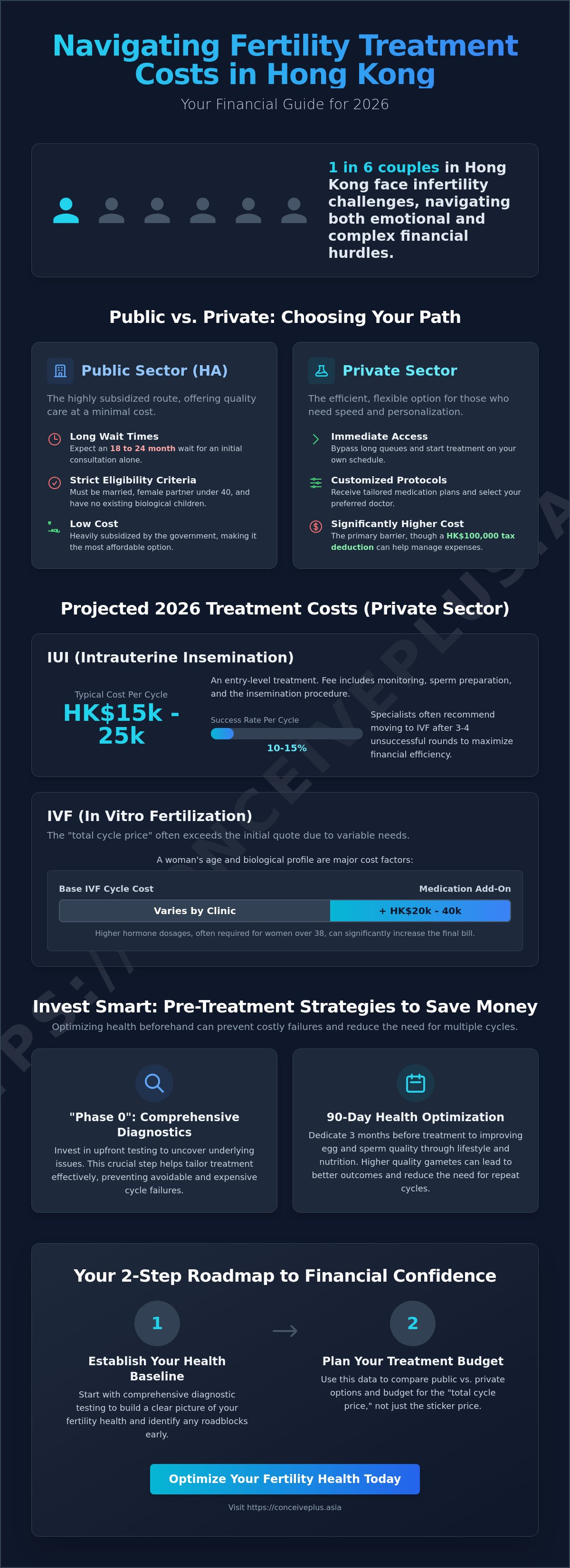
Did you know that approximately one in six couples in Hong Kong now face challenges with infertility? If you're one of them, you likely already know that the emotional toll is only half the battle. The financial side often feels like a moving target, especially with evolving regulations and the rising cost of fertility treatment in Hong Kong 2026. It's frustrating to face 18 to 24 month wait times in the public sector while fearing the unpredictable add-on costs that often surprise patients at private clinics.
We've designed this guide to remove the guesswork from your family planning budget. You'll get an expert breakdown of what to expect for IUI and IVF across both public and private systems, including the price differences between Queen Mary Hospital and private centers. We'll also explain the HK$100,000 tax deduction and how to leverage recent policy changes to your advantage. This roadmap provides the clarity you need to manage your expenses and focus on your journey to parenthood.
Key Takeaways
- Understand the full cost of fertility treatment in Hong Kong 2026 by comparing public subsidies against the speed and flexibility of private clinics.
- Learn how to budget for the "total cycle price" rather than just the sticker price, accounting for varying medication and lab fees.
- Discover why investing in comprehensive "Phase 0" diagnostic testing can save significant money by preventing avoidable cycle failures.
- Explore how a dedicated 90-day optimization phase for egg and sperm quality can reduce the need for multiple, expensive treatment rounds.
- Get a clear two-step roadmap for establishing your health baseline and starting your fertility journey with financial confidence.
The Fertility Landscape in Hong Kong: Public vs. Private in 2026
Hong Kong operates a distinct two-tier healthcare system that offers couples a choice between heavily subsidized public care and highly efficient private clinics. When we talk about Assisted Reproductive Technology (ART) in this city, we're referring to a range of medical procedures like Intrauterine Insemination (IUI), In Vitro Fertilization (IVF), and egg freezing. By 2026, the landscape has shifted. While the public sector remains the most affordable route, a growing number of residents are opting for private care to bypass long queues and access more personalized protocols. Understanding the cost of fertility treatment in Hong Kong 2026 starts with recognizing this fundamental divide between speed and savings.
To better understand the financial implications of these choices, watch this helpful video:
Public Sector: Hospital Authority (HA) Options
The public system, managed by the Hospital Authority, provides high-quality care at a fraction of the market rate. Major centers like Queen Mary Hospital (QMH), the Prince of Wales Hospital (PWH), and Kwong Wah Hospital handle the bulk of subsidized cycles. However, access is strictly regulated. To qualify for subsidized IVF in 2026, the female partner must be under 40 years old, the couple must be legally married, and they must have no existing biological children. These services have roots that trace back to the pioneering work of The Family Planning Association of Hong Kong, which helped establish the city's first sub-fertility services. The primary hurdle remains the wait time. It's common to wait 18 to 24 months for an initial consultation, with additional months added before a treatment cycle actually begins.
Private Sector: Speed and Customization
For those who can't wait or don't meet the strict HA criteria, the private sector offers immediate access. Leading institutions like the Hong Kong Sanatorium and Hospital and Union Hospital, alongside specialized boutique clinics, provide cutting-edge technology and tailored medication plans. Expats and high-income locals often prefer this route because it allows for greater control over the timeline and doctor selection. While the cost of fertility treatment in Hong Kong 2026 is significantly higher in these settings, recent policy changes have helped. The removal of statutory storage limits for embryos in late 2025 and the HK$100,000 annual tax deduction for ART services make private care more manageable. All private facilities are overseen by the Council on Human Reproductive Technology, ensuring that even the most expensive options adhere to strict ethical and safety standards.
Projected Costs for IUI and IVF in Hong Kong (2026 Estimates)
Most clinics advertise a base price for an IVF cycle, but this rarely reflects your final invoice. The total cost of fertility treatment in Hong Kong 2026 depends heavily on your biological profile. For example, a woman in her 20s might respond well to low doses of stimulation medication. In contrast, a woman over 38 often requires higher dosages of hormones to produce enough eggs for a successful cycle. This biological reality can add HK$20,000 to HK$40,000 to your bill before you even reach the egg collection stage.
Preparing your body before starting these expensive cycles can help improve your chances of success. You can explore fertility-supportive options to optimize your health during the 90 days leading up to treatment.
IUI Cost Breakdown: The Entry-Level Treatment
Intrauterine Insemination (IUI) is often the first step for couples with unexplained infertility. In 2026, private clinics typically charge between HK$15,000 and HK$25,000 per cycle. This fee covers follicle monitoring via ultrasound, sperm preparation, and the insemination procedure itself. While it's significantly cheaper than IVF, success rates are lower, often hovering around 10% to 15% per attempt. If IUI hasn't worked after three or four rounds, many specialists recommend moving to IVF to avoid throwing good money after bad.
IVF Cycle Breakdown: The Major Investment
For In Vitro Fertilisation, the financial commitment is substantial. In the private sector, a full IVF package generally ranges from HK$80,000 to HK$150,000. Public patients at hospitals like Prince of Wales pay much less, often between HK$10,000 and HK$24,500, but the 18-month wait time is a major trade-off. Beyond the base fee, you must budget for laboratory extras. Intracytoplasmic Sperm Injection (ICSI) or Pre-implantation Genetic Testing (PGT-A) can add HK$20,000 to HK$40,000 to your total. Don't forget the recurring costs. Annual embryo storage fees at private centers can reach HK$15,000, a bill that continues as long as you have frozen embryos. Understanding the full cost of fertility treatment in Hong Kong 2026 is essential before signing any clinic contracts.
Budgeting for these 'add-ons' is non-negotiable for many. PGT-A testing, which checks embryos for chromosomal abnormalities, is increasingly popular in 2026 for women over 35. While it adds to the upfront price, it can save money in the long run by reducing the risk of miscarriage and failed transfers. Always ask for a 'total cycle estimate' that includes these specific lab technologies.
Diagnostic Testing and Ancillary Expenses
Before the first needle is even prepped, you'll encounter what specialists call the "Phase 0" budget. This stage is dedicated to diagnostic accuracy, which is the most effective way to protect your investment. A failed IVF cycle is far more expensive than a comprehensive battery of tests. In the medical hubs of Central and Tsim Sha Tsui, seeking a second opinion from a top specialist is a common practice. While these consultations can range from HK$1,500 to HK$3,500, they often reveal subtle issues that might have otherwise led to a costly, unsuccessful attempt. Understanding these initial outlays is a vital part of calculating the total cost of fertility treatment in Hong Kong 2026.
Essential Tests for Him and Her
A standard workup in 2026 is surprisingly affordable compared to the treatment cycles themselves. For women, a fertility check-up package including AMH and five hormone tests is currently priced around HK$2,100 as of June 2026. Ovarian reserve and basic fertility tests can be found for approximately HK$1,600. For men, a regular semen analysis typically costs between HK$380 and HK$600. However, advanced DNA fragmentation tests are often recommended if there's a history of miscarriage, adding another HK$3,000 to HK$5,000 to your budget. Genetic screening for the couple is a larger commitment, often costing between HK$15,000 and HK$30,000. It's a significant upfront cost, but it's often worth it for those wanting to rule out hereditary conditions before creating embryos.
Insurance and Subsidies in 2026
The reality of insurance in Hong Kong is that the vast majority of local health plans do not cover ART. Some high-end international policies may offer partial coverage, but these usually come with strict waiting periods of 12 to 24 months. If you're already experiencing fertility issues, these are often classed as pre-existing conditions and excluded entirely. On a positive note, the corporate landscape is changing. Many firms in the finance and tech sectors now include fertility support as part of their employee benefit packages. Additionally, for the 2024/2025 tax year onwards, the Hong Kong government allows a tax deduction for assisted reproductive services. You can claim up to HK$100,000 per year, provided the services are from licensed practitioners. This deduction significantly offsets the cost of fertility treatment in Hong Kong 2026 for many working couples.
Optimizing Your Success: Pre-Treatment Strategies to Save Money
The most effective way to manage the cost of fertility treatment in Hong Kong 2026 is to ensure your first cycle is your only cycle. While it's tempting to rush into clinical intervention, the financial math is clear. A single successful IVF round is significantly cheaper than two or three failed attempts. Investing in your biological foundation 90 days before you start treatment can drastically improve your outcomes. This three-month window is critical because it's the time required for eggs to mature and for new sperm to develop. By optimizing your health during this period, you aren't just improving your wellness; you're protecting your financial investment.
Nutritional Support and Supplements
High-quality nutritional support is one of the most cost-effective strategies in your fertility toolkit. Compared to the HK$150,000 price tag of a private IVF cycle, targeted supplements represent a minor expense with a high return on investment. In 2026, specialists increasingly recommend specific ingredients like Myo-inositol for hormonal balance and CoQ10 for mitochondrial energy in eggs. Folic acid remains a non-negotiable foundation for reproductive health. These nutrients help prepare your body for the rigors of stimulation and transfer. To get started, you can shop fertility-focused supplement bundles designed to support your body's natural readiness.
Tools for Precision Timing
Accuracy is your best friend when trying to conceive, whether naturally or via IUI. Many couples spend thousands on clinical consultations before they've even mastered their own cycle timing. Using digital tools to identify your peak fertile window can help you time diagnostic tests more effectively and potentially help you conceive before moving to more invasive ART. A reliable ovulation calculator serves as an essential first-line diagnostic tool. It allows you to track your cycle length and pinpoint when you're most likely to ovulate. This precision ensures that when you do spend money on clinical procedures like IUI, you're doing so at the exact moment your body is most receptive.
Lifestyle adjustments also play a massive role in cycle success. Reducing high-intensity stress, maintaining a healthy BMI, and eliminating tobacco can improve the quality of your gametes. These changes don't cost anything but your commitment. When combined with targeted nutritional support and precision tracking, these habits create a fertile environment that makes the cost of fertility treatment in Hong Kong 2026 a much more manageable investment. Successful treatment isn't just about the clinic you choose; it's about the preparation you put in before the first appointment.
Next Steps: Building Your 2026 Fertility Roadmap
Now that you understand the financial variables, it's time to turn that knowledge into a concrete plan. Managing the cost of fertility treatment in Hong Kong 2026 requires a proactive approach that balances your medical needs with your financial reality. Your first priority should be obtaining a clear baseline. Schedule an AMH test and a semen analysis immediately. These tests provide the data your doctor needs to recommend the most effective treatment path, potentially saving you from investing in procedures that have a low probability of success for your specific situation.
Once you have your results, enter a 90-day optimization phase. This period is vital for improving gamete quality. Use this time to implement the lifestyle changes and nutritional strategies that can make your first clinical cycle more effective. Simultaneously, book consultations with both a public hospital and a private clinic. Comparing their timelines and estimated total costs side-by-side will help you decide if the speed of the private sector justifies the higher price tag. Finally, when you build your budget, always include a 20% contingency fund. Unexpected medication adjustments or additional lab work are common, and having this buffer reduces the stress of last-minute financial surprises.
Choosing Your Support System
Navigating infertility in a fast-paced city like Hong Kong can feel isolating. Finding a community of people who have walked this path before provides invaluable psychological support. Reading about the experiences of others can help you feel more prepared and less alone. You can check out customer reviews to see how other couples in the region prepared for their successful journeys. Feeling proactive and well-informed is a powerful tool for managing the emotional ups and downs of treatment.
Selecting the Right Products
Your pre-conception journey doesn't have to be complicated. Using targeted support can simplify your daily routine while ensuring your body gets exactly what it needs. A comprehensive approach often yields the best results, especially when you're trying to maximize the efficiency of every dollar spent on the cost of fertility treatment in Hong Kong 2026. You can explore fertility support bundles to find a streamlined solution that fits your specific needs. Taking that first small step today puts you in the driver's seat of your fertility future.
Start Your Journey with Financial Confidence
Managing the cost of fertility treatment in Hong Kong 2026 doesn't have to be overwhelming if you plan ahead. By comparing the subsidized public system with the speed of private clinics and accounting for the HK$100,000 tax deduction, you can build a realistic roadmap. The most significant savings come from maximizing the success of your first cycle. This is why a 90-day preparation phase focused on egg and sperm quality is the smartest financial and medical move you can make.
You don't have to navigate this alone. Our products are clinically formulated for couples trying to conceive and are recommended by fertility clinics worldwide. To begin, shop our Fertility Support Bundles to prepare for your journey and read thousands of success stories from parents like you. Taking proactive steps now puts you in the best position for a positive result. Your path to parenthood is unique, and being prepared is your greatest advantage.
Frequently Asked Questions
Is IVF free in Hong Kong public hospitals?
IVF isn't free in public hospitals, though it's heavily subsidized for eligible married couples. At Queen Mary Hospital, a single cycle costs between HK$11,500 and HK$19,500 for public patients. Private patients using the same public facilities will pay much higher rates, often ranging from HK$37,000 to HK$80,000 depending on the complexity of the case and specific hospital fees.
What is the age limit for IVF in Hong Kong in 2026?
For subsidized public cycles, the female partner must be under 40 years old at the time of treatment. Private clinics don't have a strict legal age limit, but they do follow established medical guidelines. Most specialists suggest that success rates decline significantly after age 40, which often influences the clinical recommendation for treatment and the types of protocols used.
How much does a single IUI cycle cost in a private HK clinic?
In 2026, the cost of fertility treatment in Hong Kong 2026 for a single IUI cycle at a private clinic is between HK$15,000 and HK$25,000. This fee typically includes follicle monitoring, sperm preparation, and the insemination procedure. It's a more affordable entry point than IVF, though many couples require two or three rounds to achieve a successful pregnancy. Always confirm if medication costs are included in the clinic's quote.
Does insurance in Hong Kong cover fertility medications?
Most local insurance plans don't cover fertility medications or ART procedures. Some high-end international policies include maternity benefits that offer partial coverage for IVF, but these come with waiting periods of up to 24 months. You'll likely need to pay for medications out of pocket, which can add HK$20,000 to HK$40,000 to your total bill depending on your ovarian response.
What are the success rates of IVF in Hong Kong for women over 40?
Success rates for women over 40 are typically below 15% per cycle in Hong Kong. This is a significant drop compared to the 50% success rate seen in women under 35. Because of these lower odds, doctors often recommend additional testing like PGT-A to ensure only chromosomal healthy embryos are transferred, which adds to the overall expense and complexity of the cycle.
How can I reduce the cost of my fertility treatment in Hong Kong?
You can reduce the cost of fertility treatment in Hong Kong 2026 by utilizing the HK$100,000 annual tax deduction for ART services. Eligible low-income individuals can also apply for the Jockey Club "FertiWell" Programme for free diagnostic services. Optimizing your health before treatment also helps by increasing the chances of a successful first cycle, potentially saving you from paying for multiple rounds of expensive clinical intervention.
How long is the waitlist for IVF at Queen Mary Hospital in 2026?
The waitlist for an initial consultation at Queen Mary Hospital is currently 18 to 24 months. After the first meeting, there can be additional months of waiting before the actual IVF cycle begins. Because of this long timeline, many couples start with private diagnostics to ensure they aren't losing precious time while waiting for a public opening to become available.
Are there any government grants for fertility treatment in HK?
While there aren't universal cash grants for everyone, the Jockey Club "FertiWell" Programme offers free fertility services to eligible individuals on government aid through 2028. For most taxpayers, the HK$100,000 annual tax deduction for ART services is the most significant form of government support. This deduction helps offset the high costs of private clinic fees and associated medical medications.


